Why Saving for Healthcare Feels Hard and How Technology Makes It Easier
Why Saving for Healthcare Feels Hard and How Technology Makes It Easier
For many individuals and families, saving for healthcare feels like an unrealistic goal. Income is often irregular, daily needs take priority, and health expenses are unpredictable. When money is tight, setting aside funds for something that may or may not happen feels less urgent than meeting immediate obligations.
Yet, when illness strikes, the lack of preparation becomes painfully clear.
The Reality of Irregular Income and Competing Priorities
Many households do not earn the same amount every month. Informal work, small businesses, and seasonal income mean cash flow fluctuates constantly. In such situations, traditional saving advice that assumes stable income simply does not work.
Rent, food, transportation, school fees, and family responsibilities compete for attention. Healthcare savings often fall to the bottom of the list, not because people do not care about their health, but because survival comes first.
This reality makes saving for healthcare feel stressful, rigid, and often unattainable.
Why Traditional Saving Models Fall Short
Conventional saving methods rely on fixed amounts and strict schedules. Miss a contribution, and the plan feels broken. This rigidity discourages consistency and leads many people to give up entirely.
Healthcare savings require flexibility. People need systems that adjust to real life, not punish it.
A Different Approach to Health Savings
Afiyavest was designed with this reality in mind. Instead of asking people to change their lives to fit a financial model, the platform adapts to how people actually live.
Saving is broken down into small, achievable steps. Contributions can be made gradually and adjusted based on income flow. This removes pressure and builds confidence over time.
How AI Makes Saving Smarter and More Human
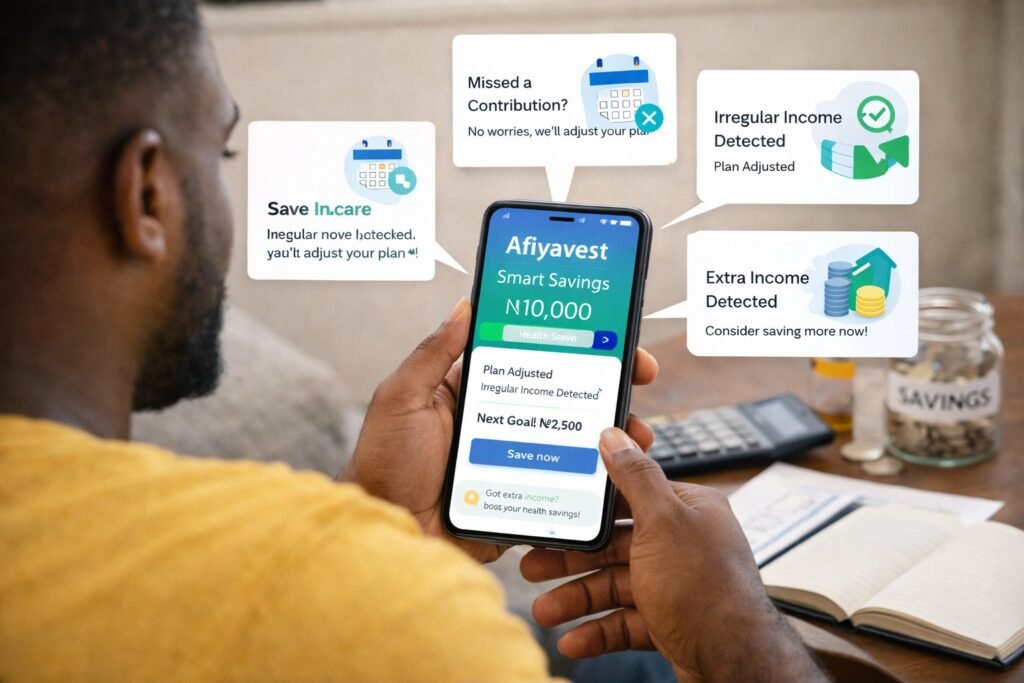
At the heart of Afiyavest is an AI-driven smart saving feature that learns from user behaviour. The system observes saving patterns and recommends plans that are realistic and sustainable.
If a user misses a contribution, there are no penalties or setbacks. The plan simply adjusts. When extra income comes in, smart prompts encourage users to save more while the opportunity is available.
This adaptive approach transforms saving from a rigid obligation into a supportive habit.
From Savings to Real Healthcare Access
Saving alone is not enough if it does not lead to care. Afiyavest connects health savings to digital enrollment into affordable health insurance and access to accredited primary healthcare centres.
This means savings are not just numbers on a screen. They translate into real healthcare access, predictable costs, and reduced out-of-pocket spending when care is needed.
Reducing Stress, Building Confidence
When people know their healthcare is planned for, anxiety reduces. Families make better decisions, seek care earlier, and avoid financial shocks. Over time, consistent saving, even in small amounts, builds both financial and health resilience.
Technology, when applied thoughtfully, can remove friction instead of adding complexity.
Saving for Health Should Feel Supportive
Healthcare savings should not feel like another burden. They should feel like support, guidance, and reassurance.
Afiyavest’s approach recognises the realities people face and uses technology to work with them, not against them. By combining flexible savings, AI-powered planning, and access to care, saving for health becomes easier, more human, and far less stressful.
That is the Afiyavest approach.